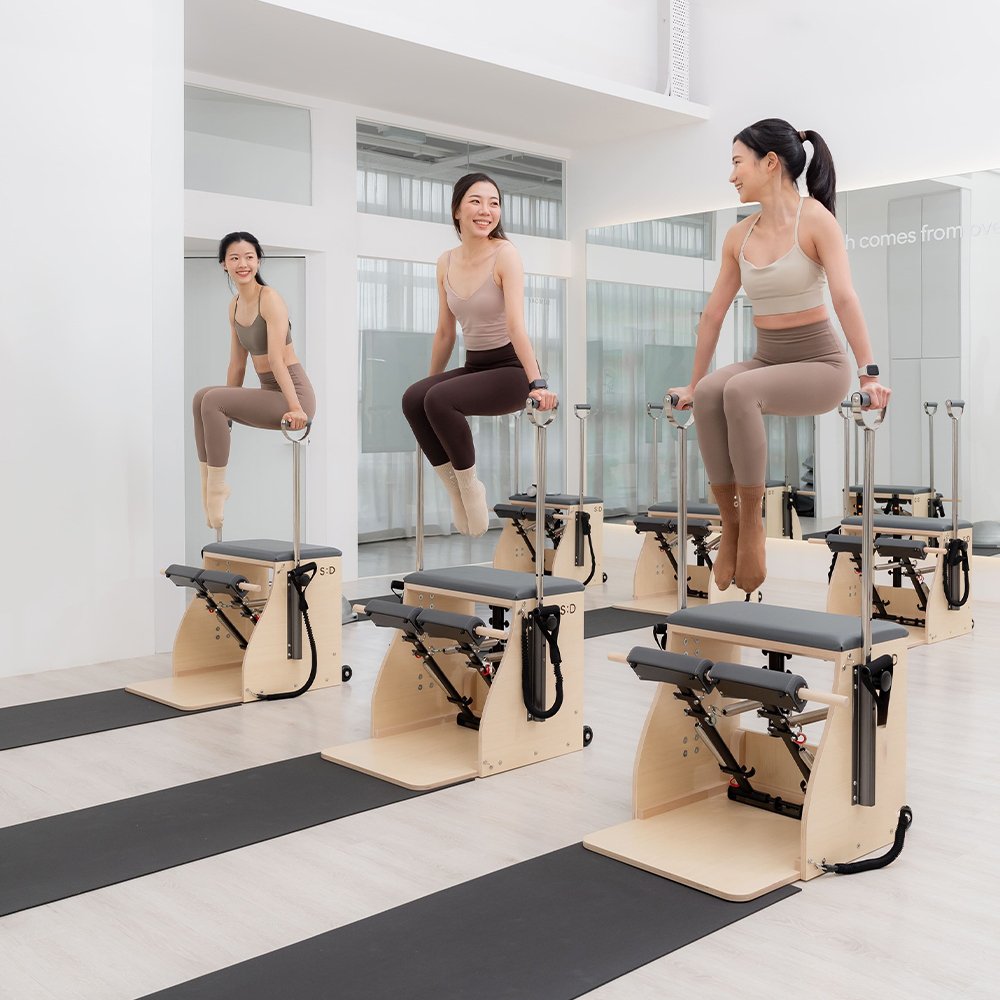
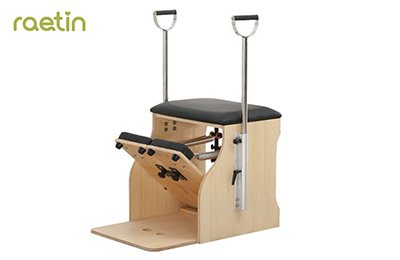
The Pilates Reformer may be the most recognizable piece of Pilates equipment, but the Pilates Chair with Handles offers a very different training experience.
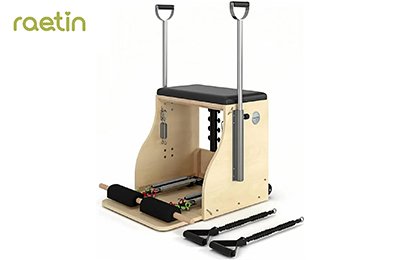
Also known as a Pilates High Chair, this apparatus combines a stable frame, spring resistance, and a moving pedal to challenge strength, balance, coordination, and movement control.
For Pilates studios and professional training spaces, it is a versatile piece of equipment that can complement a complete Pilates setup.
Why Is a Pilates Chair with Handles Effective?
The main advantage of a Pilates Chair with Handles is the combination of support and resistance.
The handles and frame provide a stable reference point, while the springs create resistance that users must control throughout each movement. This allows practitioners to focus on alignment and technique rather than relying on momentum.
A well-designed Pilates Chair can help develop:
- Lower-body strength
- Hip and core stability
- Balance and coordination
- Postural awareness
- Upper-body strength
The purpose is not simply to build strength, but to learn how to use it with greater precision.
A Pilates Chair for Different Training Levels
One of the strengths of the Pilates Chair is its versatility. It can be adapted to different levels of Pilates practice.
For Beginners
Basic exercises can introduce users to resistance while helping them learn proper leg alignment, pelvic stability, and controlled movement.
The handles also provide additional support, making it easier for beginners to understand movement patterns before progressing to more demanding exercises.
For Intermediate Practitioners
As strength and confidence improve, standing and single-leg exercises can place greater demands on balance and coordination.
The legs, hips, feet, and core must work together while controlling the spring resistance. This makes the Pilates Chair useful for developing functional strength and stability.
For Advanced Practitioners
Advanced exercises require more than muscular strength. They demand precise coordination between the upper body, core, legs, and spine.
At this stage, the Pilates Chair becomes a challenging tool for combining strength, balance, flexibility, and control within a single movement.
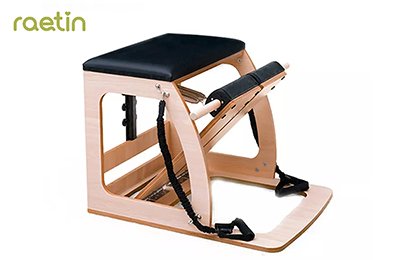
Pilates Chair with Handles vs. Wunda Chair
The Pilates Chair with Handles and the Wunda Chair both use spring resistance and a moving pedal, but their designs create different training experiences.
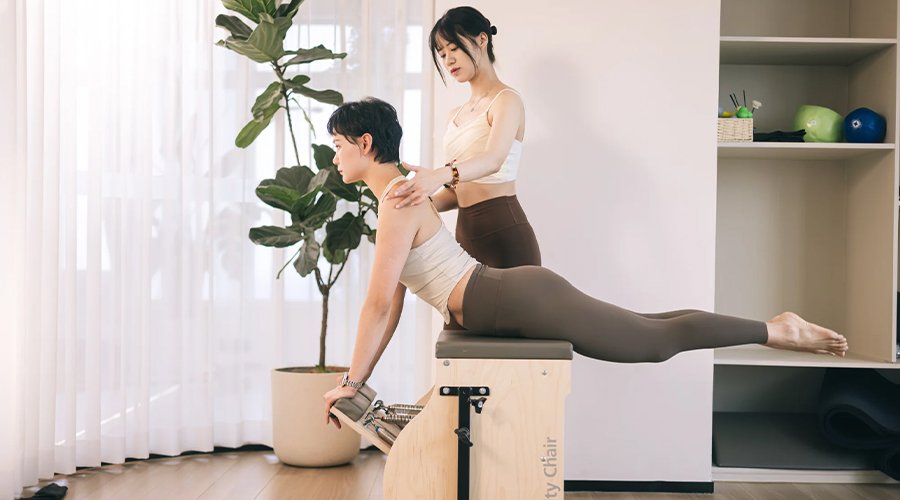
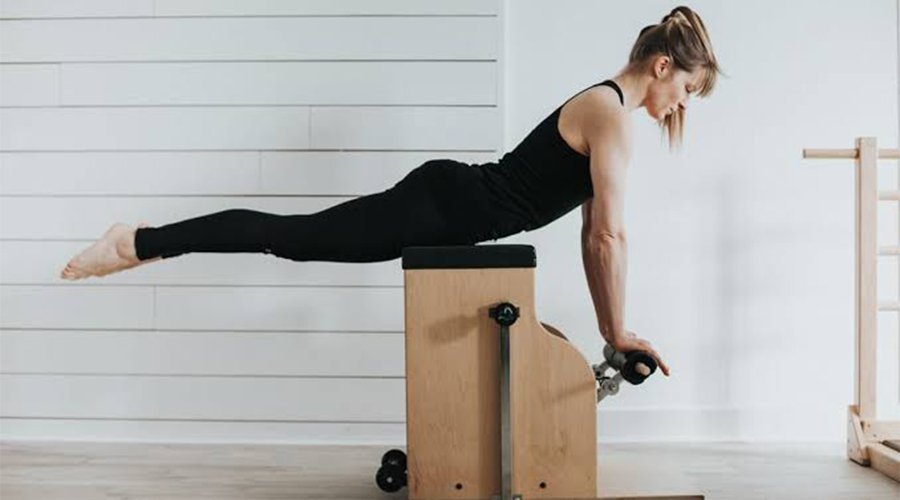
The Wunda Chair has a compact, open structure that places greater demands on independent balance and control.
The Pilates Chair with Handles provides additional support through its taller frame and handles. This makes it particularly useful for introducing standing exercises, developing strength, and helping users understand alignment.
For professional studios, the two types of chairs can complement each other and provide instructors with more programming options.
What Should You Look for in a Professional Pilates Chair?
For studio owners and equipment buyers, the quality of the apparatus is just as important as its design.
A professional Pilates Chair should provide:
Stable construction
The frame should remain secure during repeated and demanding movements.
Smooth pedal movement
Consistent pedal action helps users perform exercises with greater control and precision.
Reliable spring resistance
Predictable resistance is essential for effective training and progressive exercise programming.
Durable materials
Commercial Pilates equipment needs to withstand frequent daily use while maintaining its performance and appearance.
These details may seem simple, but they have a direct impact on both the training experience and the long-term value of the equipment.
Choosing the Right Pilates Equipment Manufacturer
For a Pilates studio, purchasing equipment is a long-term investment. Product quality, manufacturing consistency, customization, and after-sales support should all be considered when selecting a supplier.
RAETIN manufactures professional Pilates equipment with a focus on stable construction, reliable performance, and practical solutions for studios and commercial training environments.
With OEM/ODM capabilities, Raetin also supports Pilates brands, distributors, and studios with customized colors, logos, upholstery, and packaging to meet different market and branding requirements.
Final Thoughts
The Pilates Chair with Handles may have a relatively simple structure, but its training possibilities are extensive.
By combining support with spring resistance, it gives practitioners a practical way to develop strength, balance, alignment, and movement awareness.
For beginners, it provides a supportive introduction to resistance-based Pilates. For experienced practitioners, it offers increasingly demanding challenges that require precision and control.
For studios, it is more than another piece of equipment—it is a versatile tool that gives instructors more ways to help clients build strength and move with greater confidence.