I want to ask you a question, and I hope you can answer it honestly to yourself: If your exercise habits don’t change at all today, what will your body look like five years from now?
We often treat fitness as a short-term sprint—a 30-day challenge, summer shaping, a New Year’s resolution, and then give up in February. But the real changes in the body aren’t written in these short bursts, but in the quiet years. Five, ten, fifteen years—we either slowly get stronger or slowly decline.
If you live in a fast-paced city, busy with career, social life, and family every day, you might excel in almost every aspect of life. But the only area where many people are content with “good enough” is their own body.
If everything continues as usual, you might face the following:
- Avoiding travel, long flights, or playing with your children for fear of back injury.
- Feeling fatigued in daily activities, your physical foundation is crumbling.
- Subtly changing posture, a gradual loss of confidence when walking and standing.
- Believing stiffness to be an inevitable consequence of aging—which it isn’t.
The Slow Decline That Is Often Ignored
For long-term health, the most dangerous thing is often not sudden injuries, but the slow decline in ability. It doesn’t happen overnight, but silently:
Missing one workout becomes missing months. Choosing exercises that only make you sweat profusely but don’t truly teach your body how to function. Accepting chronic pain as “normal.”
Many people come to Pilates studios not because they’re lazy, but because they’ve been trying ineffective methods. They pursue muscle soreness and sweating, but ignore the most basic things. They have “gym strength,” but lack the strength to truly support life.
Let's Clarify a Few Common Hesitations
“I don’t have time.”
This actually means: I don’t have time to waste. That’s why choosing precise and effective training is even more important.
Instead of spending hours aimlessly working out in the gym, spend fifty minutes on truly quality exercise. Good training isn’t about repetition counts, but about the quality of each movement—working the deep, stabilizing muscle groups that support your body.
“I’m not sure I’m ready.”
Some might say, “I need to get in shape before I can do Pilates.”
This is putting the cart before the horse. Real Pilates isn’t a performance, it’s an exercise. It doesn’t require you to perform well, it teaches you how to control your body. If you can lie on the mat, if you can breathe, you’re ready.
“It’s a huge investment.”
Yes, training guided by a professional instructor does require investment. But let’s consider another cost: what if your body can’t support the life you want? What does it mean to endure chronic pain in the long term?
We’re willing to pay for convenience, entertainment, and dining out, yet we often hesitate to invest in the body that supports it all.
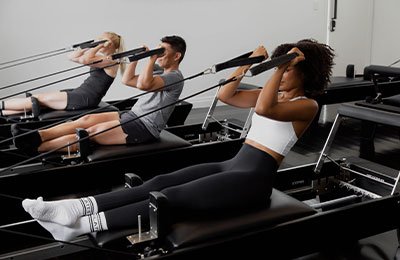
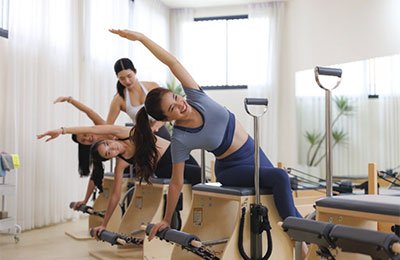
Truly Effective Training: From "Muscle Strength" to "Muscle Intelligence"
Many gym workouts focus on how much you can lift or how long you can hold a position. Truly effective Pilates focuses on your muscle connectivity—what we call “muscle intelligence.”
This means the brain can communicate with the muscles effectively and promptly. It determines whether you strain your back when lifting heavy objects or easily accomplish the task by engaging your core and glutes.
When you train correctly, you change not only your muscles but also your nervous system. You will learn to:
- Engage your deep core before moving your limbs
- Create space for your spine during movements to reduce stress
- Find strength in stretching, building a lean and functional physique
This is why many people feel taller after practicing—because their spine returns to its correct position.
Why Choose a Truly Effective Method
Today, there are all sorts of “Pilates” on the market—spinning Pilates, hot Pilates, and various other innovative versions. But a truly effective system has been proven over decades.
It doesn’t need to be reinvented; it just needs to be practiced diligently.
Many popular fitness trends focus on “feeling a muscle burn” or “being exhausted,” often neglecting the body’s most basic movement principles. Truly good training focuses on how each movement prepares the body for the next, ensuring balance, coordination, and safety throughout.
What Kind of Person Do You Want to Be in Five Years?
Let’s return to the initial question: If everything remains the same, where will you be in five years?
Now, imagine another possibility:
- Three Months Later: You find that your chronic back pain has disappeared. You unconsciously adjust your posture at your desk. You have more energy in the afternoon than before.
- One Year Later: Your posture has changed—not simply “becoming thinner,” but your entire demeanor is different. You feel more powerful when walking and can perform movements you wouldn’t have dared to attempt before.
- Five Years Later:Although you’ve aged, your vitality is undiminished. While your peers complain of stiffness, you can still hike, travel, and move freely. You’ve built a valuable “health reserve” for yourself.
The Value of Professional Equipment

To achieve such long-term changes, besides the right methods and professional guidance, reliable exercise equipment plays a crucial role. Precise spring resistance and a stable machine structure provide accurate feedback for every movement, helping practitioners build body control more safely and effectively.
As a Pilates equipment manufacturer, Raetin understands the impact of equipment on training results. We are committed to providing well-designed, durable professional equipment so that every practitioner can focus on physical growth and progress with safe and reliable support.
Your Body Is Waiting for Your Choice
If you don’t actively take control of your health, you will be controlled by injuries, aging, and physical limitations.
You’re not unaware of what you need; you may just be hesitating. And the best time to start is now.
Don’t let another year slip away in a “good enough” mentality. Choose a path that will truly make you stronger, more agile, and more confident five years from now. Your body deserves that investment.